
Introduction
For decades, humanoid robots have captured people’s imagination through science fiction movies, futuristic stories, and technological experiments. Robots that walk like humans, recognize faces, respond to spoken instructions, and perform everyday tasks once seemed like distant possibilities. Today, rapid advances in artificial intelligence, robotics engineering, computer vision, and sensor technology are bringing some of these ideas closer to reality.
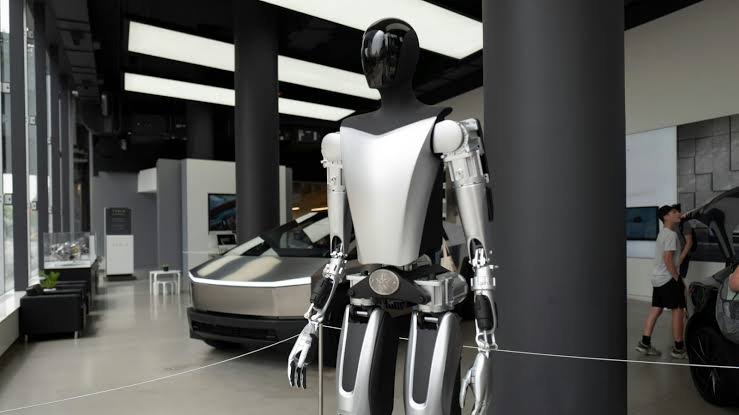
Humanoid robots are designed to resemble the human body, typically featuring a head, torso, two arms, and two legs. Their human-like structure allows engineers to explore how machines might operate in environments originally designed for people. From navigating hallways and handling objects to assisting workers and supporting research, these robots are being developed for a growing range of applications.
What makes the latest generation particularly interesting is the combination of physical movement with increasingly capable AI systems. Traditional industrial robots are generally programmed to perform specific tasks in controlled environments. Newer humanoid robots are being designed to perceive their surroundings, interpret instructions, adapt to changing situations, and learn from experience. Although their abilities remain limited in many real-world conditions, the direction of development is clear: robotics is moving toward machines that can perform a wider variety of tasks with less specialized infrastructure.
Technology companies, research institutions, and manufacturers are investing heavily in this field. Some are developing robots for warehouses and factories, while others are exploring applications in healthcare, domestic assistance, logistics, and hazardous environments.
However, the rise of humanoid robots also raises important questions. Can they perform useful work safely and reliably? Will they become affordable enough for widespread adoption? How might they affect employment, privacy, and human relationships?
Understanding these questions requires looking beyond impressive demonstrations and examining the technologies, opportunities, and limitations shaping the industry.
This article explores how humanoid robots work, what the next generation can do, where they may be used, and how they could influence the future of everyday life.
1. What Are Humanoid Robots?
Humanoid robots are machines designed with a body structure that resembles the human form. Most feature a torso, two arms, a head-like sensor assembly, and, in some cases, two legs that allow them to walk.
Their design is not simply about appearance. Human environments are built around human dimensions and abilities. Door handles, stairs, shelves, workstations, tools, and household objects are generally designed for people rather than machines.
A robot with a human-like body may be able to interact with these environments without requiring every location to be redesigned.
For example, a humanoid robot could potentially move through a warehouse, pick up a box, place it on a shelf, and operate equipment designed for human workers. In a home, a similar robot might eventually assist with carrying objects, collecting laundry, or moving items between rooms.
However, having a human-shaped body does not automatically make a robot intelligent or useful. Walking on two legs is mechanically challenging, and performing delicate tasks with robotic hands requires considerable precision.
Humanoid robots therefore combine several complex technologies, including motors, mechanical joints, sensors, control systems, computer vision, and AI software.
Some robots are designed primarily for research and experimentation. Others are being developed for industrial work or public interaction.
Their capabilities vary widely. A robot that can walk across a laboratory may not be able to climb stairs reliably, while one that can pick up a simple object may struggle with flexible materials or unfamiliar tools.
The central goal is to build machines that can perform useful physical tasks in environments where people currently work and live.
2. How Do Modern Humanoid Robots Work?
A modern humanoid robot depends on the coordinated operation of hardware, sensors, software, and AI.
Each component has a specific role, but the robot must bring them together to move safely and complete a task.
Sensors and perception
Humanoid robots use cameras, depth sensors, microphones, force sensors, and other devices to gather information about their surroundings.
Cameras help identify objects and obstacles. Depth sensors estimate distances, while force sensors can help a robot determine whether it is gripping an object too tightly or applying insufficient pressure.
Some robots also use inertial sensors to estimate their orientation and movement.
These inputs allow the robot to build an understanding of its environment, although its perception can still be affected by poor lighting, clutter, reflective surfaces, and unexpected movement.
Movement and balance
Humanoid robots use electric motors, actuators, and mechanical joints to move their limbs.
Walking on two legs requires continuous coordination. The robot must maintain balance, adjust its posture, and respond to changes in the ground beneath its feet.
Even a small disturbance can create problems if the robot cannot react quickly enough.
Advanced control systems use sensor data to adjust movement and maintain stability. Some robots can recover from minor disturbances, but reliable performance across uneven surfaces and unpredictable environments remains challenging.
Artificial intelligence
AI helps robots interpret information and select appropriate actions.
Computer vision models may identify objects, while language models can help interpret spoken or written instructions. Planning systems can then break a task into smaller steps.
For example, if instructed to move a package to a table, the robot must identify the package, determine where the table is, plan a route, reach for the object, grasp it, and move it without colliding with nearby obstacles.
Every stage requires coordination between perception, planning, and physical control.
Learning and adaptation
Some humanoid robots are trained using demonstrations, simulations, collected movement data, or reinforcement learning.
These techniques can help robots improve their performance on specific tasks and adapt to variations in their environment.
However, learning in a simulation does not guarantee success in the physical world. Real objects may have different weights, surfaces may provide unexpected friction, and sensors may behave differently outside controlled conditions.
The challenge is to combine intelligence with dependable physical performance.
3. The Role of AI in the Next Generation of Robotics
Artificial intelligence is one of the most important developments influencing humanoid robotics.
Earlier robots often relied on carefully programmed sequences. They performed well when the environment remained predictable but could struggle when an object moved or a task changed.
AI-based systems offer the possibility of more flexible behavior.
For example, a robot might use computer vision to recognize several types of packages rather than relying on fixed coordinates. It could then adjust its movements according to the package’s position and shape.
Language-based AI can also make instructions more natural. Instead of requiring an operator to enter a long sequence of commands, a system may be able to interpret an instruction such as, “Pick up the empty container and place it beside the workstation.”
The robot still needs a reliable way to translate that instruction into physical actions, but AI can simplify the interaction between people and machines.
Another important development is the combination of different AI capabilities within a single system. A humanoid robot may use one model to interpret language, another to recognize objects, and specialized controllers to manage balance and movement.
Researchers are also exploring vision-language-action models, which connect visual observations and language instructions with physical actions.
These systems aim to help robots learn relationships between what they see, what they are asked to do, and how they should move.
Nevertheless, AI does not eliminate the difficulty of robotics. A model may misunderstand an instruction, misidentify an object, or suggest an action that is physically impossible.
The next generation will need systems that combine flexible reasoning with strict safety controls and accurate movement.
4. Humanoid Robots in Manufacturing and Factories
Manufacturing is one of the most promising environments for humanoid robots because many factory tasks involve repetitive physical activities.
Factories already use industrial robotic arms, automated vehicles, and specialized machines. Humanoid robots offer a different approach by attempting to combine mobility with the ability to manipulate objects using human-like limbs.
A robot might be designed to transport components, move containers, organize materials, or assist with selected assembly operations.
Because factories often have structured layouts, predictable workflows, and designated operating areas, they can provide a practical starting point for testing these machines.
Humanoid robots could be particularly useful where a business wants to automate tasks but does not want to rebuild an entire workspace around a specialized robot.
For example, a manufacturer might evaluate whether a humanoid robot can move materials between workstations using existing walkways and storage arrangements.
However, many industrial tasks still favor conventional automation. A fixed robotic arm may be faster, more precise, and less expensive for a repetitive operation that never changes.
Humanoid robots must therefore demonstrate a clear advantage in flexibility, deployment costs, or the variety of tasks they can perform.
Reliability is another major requirement. A machine used in production must operate consistently across long shifts, recover from errors, and complete work without creating unacceptable safety risks.
For now, the most realistic industrial applications are likely to involve carefully selected tasks rather than complete replacement of human workers across an entire factory.
As hardware becomes more durable and AI-based control improves, the range of suitable applications may expand.
5. Humanoid Robots in Warehouses and Logistics
Warehouses and distribution centers are also attracting attention because they involve continuous movement of goods, packages, containers, and supplies.
Although many facilities already use automated storage systems and mobile robots, certain activities still require people to handle objects of different shapes and sizes.
Humanoid robots could potentially help with material handling, sorting, replenishment, and moving goods between designated locations.
For example, a robot might collect a container from a shelf and transport it to a packing station. Another application could involve moving materials from a delivery area to an assigned storage location.
These tasks require a combination of navigation, object recognition, grasping, and route planning.
One of the main challenges is handling variation. Packages can differ in size, weight, texture, and condition. Objects may be partially hidden, stacked unevenly, or placed in unfamiliar positions.
A robot must also operate safely around workers, forklifts, carts, and other moving equipment.
Speed matters as well. If a humanoid robot takes significantly longer than a person to complete a task, the economic benefits may be limited.
Businesses must consider not only the robot’s purchase price but also charging, maintenance, software, supervision, and downtime.
The strongest early applications may involve tasks that are physically demanding, repetitive, or difficult to automate with existing equipment.
Over time, improvements in robotic hands, perception, and task planning could make humanoid robots more useful in complex logistics environments.
6. Could Humanoid Robots Become Household Assistants?
One of the most appealing possibilities is the use of humanoid robots in homes.
Unlike factories, homes are unpredictable environments. Furniture may move, objects can be left on the floor, pets may walk through a robot’s path, and everyday items come in many different shapes and materials.
These conditions make household robotics particularly challenging.
A home assistant would need to perform tasks such as picking up objects, carrying laundry, organizing supplies, or helping with basic cleaning.
It would also need to recognize when a task is unsafe or beyond its capabilities.
For example, picking up a lightweight plastic container is relatively straightforward compared with handling a hot pan, opening a tightly sealed bottle, or moving a fragile object through a crowded room.
Household robots would need to distinguish between these situations and adjust their actions accordingly.
Privacy is another consideration. A robot that navigates a home may rely on cameras, microphones, and environmental sensors. Manufacturers would need to explain how this data is processed and ensure that sensitive information is protected.
Cost remains a major obstacle, too. A household robot must provide enough value to justify its purchase, maintenance, and operating expenses.
For these reasons, a general-purpose humanoid robot capable of managing an entire household is not yet a practical option for most people.
More limited household applications may become viable first, especially when a robot can reliably perform a small number of useful tasks.
The long-term opportunity is significant, but everyday household assistance will require considerable progress in affordability, safety, dexterity, and reliability.
7. Humanoid Robots in Healthcare and Elderly Care
Healthcare is another area where humanoid robots could provide support, particularly as hospitals and care facilities manage growing demands on staff.
Potential applications include transporting supplies, delivering selected items, providing reminders, assisting with simple administrative tasks, and helping patients interact with digital services.
A robot might carry linens or medical supplies through a hospital while staff focus on tasks that require professional judgment and personal attention.
Humanoid robots could also offer physical assistance in certain carefully designed settings, although direct patient handling requires specialized engineering and strict safety procedures.
In elderly care, robots may eventually help with reminders, communication, simple household activities, and access to entertainment or information.
Some people may appreciate having a device that provides reminders or helps them connect with family members.
However, healthcare and elder care involve more than physical tasks. Patients may need emotional support, sensitive communication, and complex decisions that require human understanding and professional expertise.
Robots should not be treated as automatic replacements for nurses, caregivers, or clinicians.
Safety is especially important when machines operate near vulnerable individuals. A robot must recognize obstacles, limit its force, respond appropriately to unexpected movement, and avoid actions that could cause injury.
Healthcare systems also need clear rules about privacy, responsibility, and human supervision.
The most useful role for humanoid robots may be to reduce repetitive workloads and support caregivers rather than replace the human relationships at the heart of care.
8. The Role of Humanoid Robots in Dangerous Environments
Humanoid robots could also help people perform tasks in environments that are hazardous or difficult to access.
Examples include disaster zones, industrial accident sites, certain chemical facilities, and areas affected by structural damage.
A robot capable of navigating human-designed spaces and manipulating tools could potentially assist with inspections, material movement, and selected emergency operations.
For example, after an industrial accident, a robot might enter an area that is temporarily unsafe for human workers to inspect directly.
It could use cameras and sensors to collect information or carry lightweight equipment to a designated location.
In disaster response, robots may be useful for searching damaged buildings, moving debris, or delivering supplies, depending on their design and environmental limitations.
However, these environments present significant challenges. Floors may be unstable, visibility may be poor, communications may fail, and obstacles may not resemble anything encountered during training.
Battery life and physical durability are also important. A robot that performs well in a laboratory may struggle with dust, water, heat, or debris.
For many dangerous tasks, specialized tracked robots, drones, or remotely operated vehicles may remain more suitable than humanoid machines.
The value of a humanoid design depends on whether human-like mobility and manipulation provide an advantage in the particular environment.
Even so, the ability to send machines into selected dangerous situations could help reduce human exposure to certain risks.
9. Why Human-Like Hands and Movement Matter
Walking and maintaining balance are important challenges, but manipulating objects may be even more significant for many practical applications.
Human hands are extraordinarily versatile. They can grasp large objects, hold small components, turn handles, use tools, and adjust pressure based on touch.
Replicating these abilities requires sophisticated mechanical design and control.
Robotic hands may use multiple joints, force sensors, tactile sensors, and advanced control algorithms to handle objects more effectively.
However, greater dexterity often increases mechanical complexity, cost, and the number of components that can fail.
Some tasks do not require human-like hands. A simple gripper may be more reliable and efficient for lifting identical boxes.
For humanoid robots intended to work in human environments, however, the ability to manipulate a wide variety of objects could provide a significant advantage.
Movement presents similar trade-offs.
Two-legged walking allows a robot to use stairs and navigate spaces designed for people, but wheeled robots are often faster and more energy-efficient on smooth surfaces.
Humanoid robots must therefore balance versatility against stability, speed, durability, and energy consumption.
The best design depends on the work the robot is expected to perform.
Future advances in actuators, lightweight materials, tactile sensing, and control software may improve these capabilities, making robots more effective at handling everyday objects and moving through complex environments.
10. Humanoid Robots and the Changing Workplace
As humanoid robots become more capable, their introduction could influence how people work.
Some jobs involve repetitive lifting, transporting materials, inspecting equipment, or performing routine physical operations. These activities may become candidates for automation as robots improve.
Automation could reduce certain physical burdens and allow workers to focus on tasks that require problem-solving, coordination, creativity, and judgment.
For example, a warehouse worker might supervise robotic operations, resolve unusual inventory problems, and coordinate deliveries rather than spending an entire shift moving containers.
New roles could emerge in robot maintenance, fleet management, system integration, safety testing, and AI operations.
However, the transition may also create uncertainty for workers whose responsibilities are heavily concentrated in tasks that become automated.
The effects will depend on how quickly robots are adopted, which tasks they can perform economically, and how businesses reorganize their operations.
Humanoid robots are unlikely to replace every worker in a particular occupation simply because they can perform one or two tasks associated with that job.
Most jobs contain a mixture of physical, social, cognitive, and organizational responsibilities. Automating selected tasks does not necessarily mean automating the entire role.
Businesses, governments, and educational institutions should prepare for these changes through workforce training, reskilling opportunities, and thoughtful deployment strategies.
The objective should be to help people adapt to changing work rather than assume that automation will automatically benefit everyone.
11. The Biggest Challenges Facing Humanoid Robotics
Despite impressive progress, several major obstacles remain before humanoid robots can become widely useful.
High development and operating costs
Humanoid robots require specialized mechanical components, sensors, computing hardware, batteries, and software.
Manufacturing them at scale may reduce costs, but businesses must also account for maintenance, repairs, and operational downtime.
Battery life and energy efficiency
Walking, balancing, lifting, and processing sensor data consume energy.
A robot that needs frequent charging may be less useful in environments that require continuous operation.
Improving battery technology and energy-efficient movement is therefore a major priority.
Reliability in unpredictable environments
Real-world environments contain unexpected obstacles, unfamiliar objects, and changing conditions.
Robots must become better at handling situations that differ from their training data without making unsafe decisions.
Safety around people
Humanoid robots may operate near workers, customers, patients, and children.
Their movements must be predictable, their force must be appropriately limited, and their control systems must respond safely to faults.
Dexterity and physical limitations
Picking up unusual objects, manipulating flexible materials, and performing delicate work remain difficult.
Robotic hands and control systems need further improvement before many complex household and industrial tasks become practical.
General-purpose intelligence
A robot may perform one task reliably but struggle when asked to do something substantially different.
Moving toward more general-purpose behavior requires improvements in perception, planning, learning, and the ability to recognize uncertainty.
These challenges explain why impressive demonstrations should not automatically be interpreted as proof of readiness for large-scale deployment.
The next stage of development will depend on consistent performance in real operating conditions.
12. Ethics, Privacy, and Responsible Robotics
Humanoid robots introduce important ethical questions, especially when they operate in homes, hospitals, workplaces, or public spaces.
Privacy is one of the most immediate concerns. Robots may collect video, audio, location information, and other environmental data to understand their surroundings.
Manufacturers should minimize unnecessary data collection, secure sensitive information, and clearly explain how recordings are stored and used.
Safety and accountability are equally important.
If a robot damages property or injures someone, it should be possible to investigate what happened and determine whether the cause involved software, hardware, system integration, or human operation.
Organizations deploying robots need clear procedures for maintenance, supervision, emergency stops, and incident reporting.
There are also concerns about excessive dependence on automated systems. People should retain appropriate control over important decisions, particularly in healthcare, education, and other settings involving vulnerable individuals.
The human-like appearance of a robot may influence how people respond to it. Some users may assume that a machine is more intelligent, emotionally aware, or trustworthy than it actually is.
Designers should avoid misleading people about a robot’s abilities or suggesting that simulated expressions necessarily represent genuine emotions.
Responsible robotics requires transparency about what machines can do, what they cannot do, and when human intervention is necessary.
By addressing these issues early, developers can help build public confidence and encourage useful adoption without overlooking potential harms.
13. What Does the Future Hold for Humanoid Robots?
The future of humanoid robotics will likely be shaped by gradual improvements in several areas rather than one sudden breakthrough.
AI models may become better at interpreting instructions, identifying objects, and planning sequences of actions. Improvements in robotic hands could allow machines to handle more varied objects, while more efficient actuators may improve movement and reduce energy consumption.
Training methods may also become more effective. Robots can learn from demonstrations, simulation, recorded movements, and carefully structured real-world experience.
As more machines are deployed, developers may gain access to larger amounts of operational data that can help identify common failures and improve performance.
However, collecting data alone will not guarantee progress. Robots must still be tested under realistic conditions, and lessons from one environment may not transfer perfectly to another.
In the near term, commercial adoption is likely to focus on environments where tasks are valuable, measurable, and reasonably predictable.
Factories, warehouses, and selected logistics operations may offer more practical starting points than homes because they provide clearer objectives and more structured workflows.
Over time, more affordable hardware and better general-purpose control could expand the range of applications.
The most successful humanoid robots may not be the machines that look the most human. They may be the ones that complete useful tasks safely, consistently, and at a cost that makes sense.
Ultimately, the future of humanoid robotics will depend on practical performance rather than appearance alone.
Conclusion
The rise of humanoid robots marks an important stage in the evolution of robotics and artificial intelligence. By combining human-like movement with advanced sensors, AI, and increasingly sophisticated control systems, developers are creating machines that may be able to perform a wider variety of physical tasks in human environments.
Manufacturing, logistics, healthcare support, household assistance, and hazardous operations are among the areas where these robots could provide value.
Their greatest advantage may be flexibility. Rather than designing a completely new automated system for every task, businesses may eventually be able to deploy adaptable robots in environments already built for people.
However, major challenges remain. Cost, battery life, reliability, dexterity, safety, and the ability to handle unpredictable situations will determine how quickly humanoid robots move from demonstrations into routine use.
Their impact on employment and privacy also deserves careful attention. Responsible deployment should prioritize safety, transparency, workforce preparation, and meaningful human oversight.
For now, humanoid robots are best understood as an emerging technology with significant potential rather than machines ready to perform every human task.
As AI and robotics continue to advance, these systems could become valuable partners in selected workplaces and everyday environments. Their long-term success will depend on whether they can solve real problems, operate dependably, and provide benefits that justify their cost and complexity.
The next generation of robotics is not simply about building machines that look like humans. It is about developing machines that can work effectively in the human world and help people accomplish tasks that are difficult, repetitive, or dangerous.