
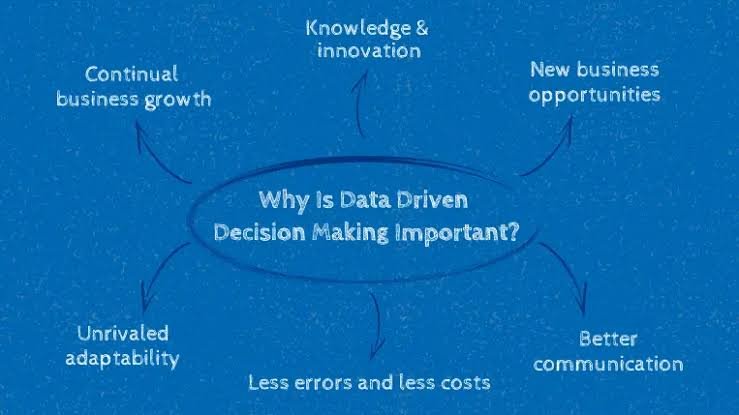
In today’s competitive business environment, making decisions based only on assumptions or intuition is no longer enough. Companies have access to more information than ever before, from customer purchases and website visits to sales reports and market trends. The challenge is knowing how to turn all this information into useful insights. This is where Business Analytics plays an important role.
Business analytics helps organizations examine data, identify patterns, understand performance, and make better decisions. Whether a company is trying to increase sales, improve customer satisfaction, reduce costs, or plan for future growth, analytics can provide valuable guidance.
From small businesses to large international corporations, organizations are increasingly using data to understand what is happening inside their business and what they can do next. Business analytics is not simply about collecting numbers; it is about using those numbers to solve real business problems.
What Is Business Analytics?
Business analytics is the process of using data, statistical methods, technology, and analytical techniques to understand business performance and support decision-making. It allows companies to look at past and current information and use it to make more informed choices.
For example, an online store may analyze its sales data to discover which products are selling the most, which months generate the highest revenue, and which customers are most likely to make another purchase. Based on these findings, the company can adjust its marketing strategy, inventory, and pricing.
The main goal is simple: turn business data into actionable information.
Instead of asking, “What do we think will happen?” businesses can use analytics to ask, “What does the data tell us?”
Why Is Business Analytics Important?
Business analytics has become an essential part of modern business because companies operate in an environment where customer expectations, competition, and market conditions can change quickly.
One major benefit is improved decision-making. When managers have reliable information, they can make decisions with greater confidence. Analytics can highlight problems that might otherwise remain unnoticed and reveal opportunities that could be difficult to identify manually.
Another important advantage is improved efficiency. By analyzing operational data, businesses can find areas where time, money, or resources are being wasted. For example, a manufacturing company can examine production data to identify delays or recurring equipment problems.
Analytics can also help businesses understand their customers. Companies can study purchasing behavior, feedback, website activity, and customer interactions to learn what people want. This knowledge can then be used to create better products, personalized marketing campaigns, and stronger customer experiences.
Types of Business Analytics
Business analytics is commonly divided into four major types. Each type answers a different business question.
1. Descriptive Analytics
Descriptive analytics focuses on what has already happened. It examines historical data and presents it in a way that is easier to understand.
For example, a business might use descriptive analytics to determine its total sales last year, monthly revenue, number of new customers, or website traffic.
Reports, dashboards, and charts are common tools used for this type of analytics.
2. Diagnostic Analytics
Diagnostic analytics goes one step further by asking why something happened.
Suppose a company notices that its sales decreased during a particular month. Diagnostic analytics can help investigate the possible reasons. The decline might be connected to higher prices, reduced advertising, supply problems, seasonal demand, or increased competition.
Understanding the cause of a problem allows businesses to take more appropriate action.
3. Predictive Analytics
Predictive analytics uses historical and current data to estimate what may happen in the future.
Businesses can use predictive models to forecast sales, identify potential customer demand, estimate financial risks, or predict which customers may stop using a service.
Predictive analytics does not guarantee what will happen. Instead, it provides businesses with informed estimates that can support planning and preparation.
4. Prescriptive Analytics
Prescriptive analytics focuses on what a business should do next. It uses data, models, and possible outcomes to recommend actions.
For instance, if an analytics system predicts that demand for a product will increase, it may help a company determine how much additional inventory it should order.
This type of analytics can be particularly useful when businesses need to compare several possible decisions.
How Businesses Use Analytics
Business analytics can be applied to almost every area of an organization.
In marketing, companies can analyze campaign performance, customer behavior, and conversion rates. This helps marketing teams understand which strategies are producing results and where improvements are needed.
In sales, analytics can reveal sales trends, high-performing products, and customer purchasing patterns. Sales managers can use this information to set realistic targets and identify opportunities.
In finance, analytics can help organizations monitor expenses, revenue, profitability, and financial risks. Financial teams can use data to create better forecasts and identify unusual spending patterns.
In human resources, companies can analyze employee turnover, recruitment data, attendance, and workforce trends. These insights can help HR teams improve hiring and employee retention strategies.
In operations, analytics can be used to monitor productivity, supply chains, inventory, and resource utilization. Businesses can identify bottlenecks and improve processes based on measurable evidence.
Business Analytics and Customer Experience
Customers are at the center of almost every successful business, and analytics can help companies understand them better.
A business may collect information from online purchases, customer reviews, surveys, support requests, and website interactions. When this information is analyzed properly, it can reveal customer preferences and common problems.
For example, if customers frequently abandon their shopping carts at the payment stage, analytics may encourage the company to investigate its checkout process. Perhaps the process is too complicated, shipping costs are unclear, or there are not enough payment options.
By identifying these issues, a company can make targeted improvements instead of making random changes.
Personalization is another important area. Businesses can use customer data to recommend relevant products, provide targeted offers, and create more useful communication. When done responsibly, this can improve the overall customer experience.
Tools Used in Business Analytics
Businesses use a variety of tools and technologies to analyze information. The right tool depends on the size of the organization, the type of data, and the goals of the analysis.
Spreadsheets are still useful for basic analysis and reporting, especially for small businesses. More advanced organizations may use business intelligence platforms, databases, statistical software, and cloud-based analytics systems.
Data visualization tools are also important because large amounts of information can be difficult to understand in raw form. Charts, graphs, and dashboards make important trends easier to recognize.
Artificial intelligence and machine learning are also becoming increasingly connected with business analytics. These technologies can help organizations process large datasets, identify complex patterns, automate certain tasks, and generate predictions.
However, technology alone does not create good business decisions. Organizations also need skilled people who understand both the data and the business problem they are trying to solve.
Benefits of Business Analytics
There are several reasons companies invest in business analytics.
First, it can improve the quality of decision-making by replacing guesswork with evidence. Second, it can help businesses identify inefficiencies and reduce unnecessary costs.
Analytics can also support revenue growth. By understanding customer behavior and market trends, companies can discover new opportunities and improve their sales strategies.
Another benefit is risk management. Data can help businesses recognize warning signs and prepare for potential problems before they become more serious.
Finally, analytics can create a competitive advantage. A company that understands its customers, operations, and market more clearly may be able to respond faster than competitors that rely mainly on assumptions.
Challenges of Business Analytics
Although business analytics offers many advantages, it also comes with challenges.
One common problem is poor data quality. If information is incomplete, outdated, duplicated, or inaccurate, the resulting analysis may also be unreliable.
Data security and privacy are additional concerns. Businesses must handle customer and employee information responsibly and follow applicable laws and regulations.
Another challenge is the shortage of analytical skills. Companies may have large amounts of data but lack employees who know how to interpret it effectively.
There can also be resistance to change. Employees and managers who are accustomed to traditional decision-making methods may initially find it difficult to adopt a data-driven approach.
For these reasons, successful analytics requires more than software. Businesses need reliable data, appropriate processes, skilled employees, and a culture that values evidence-based decision-making.
The Future of Business Analytics
The future of business analytics is likely to become even more closely connected with artificial intelligence, automation, and real-time data.
Businesses are increasingly looking for ways to receive insights quickly rather than waiting for monthly or quarterly reports. Real-time analytics can help organizations respond to changing customer behavior, operational problems, and market conditions more rapidly.
AI-powered systems may also make analytics more accessible to people who do not have advanced technical skills. Instead of manually analyzing complex datasets, users may be able to ask business questions in simple language and receive useful summaries or visualizations.
At the same time, responsible data use will remain important. As businesses collect and analyze more information, they will need to pay close attention to privacy, security, transparency, and ethical considerations.
Frequently Asked Questions (FAQs)
1. What is Business Analytics in simple words?
Business analytics is the process of examining business data to understand what is happening, why it is happening, what may happen next, and what actions a company can take. It helps organizations make more informed decisions instead of relying entirely on assumptions.
2. What are the four types of Business Analytics?
The four main types are descriptive, diagnostic, predictive, and prescriptive analytics. Descriptive analytics explains what happened, diagnostic analytics explores why it happened, predictive analytics estimates what may happen in the future, and prescriptive analytics helps determine what action should be taken.
3. Why is Business Analytics important for companies?
Business analytics helps companies make better decisions, understand customers, improve efficiency, reduce costs, manage risks, and identify growth opportunities. It allows organizations to use evidence and data when developing business strategies.
4. Is Business Analytics only useful for large companies?
No. Businesses of all sizes can benefit from analytics. A small business can analyze sales, customer behavior, expenses, and marketing results using relatively simple tools. Larger organizations may use more advanced systems to process much larger and more complex datasets.
5. What skills are needed for Business Analytics?
Important skills include data analysis, critical thinking, problem-solving, statistics, communication, and an understanding of business operations. Knowledge of spreadsheets, databases, data visualization, and analytical software can also be valuable.
6. How does Business Analytics help improve customer satisfaction?
Analytics can reveal customer preferences, purchasing patterns, complaints, and areas where customers experience difficulties. Businesses can use these insights to improve products, services, communication, and overall customer experiences.
Conclusion
Business Analytics has changed the way modern organizations understand performance and make decisions. By examining historical information, identifying causes, predicting possible outcomes, and recommending actions, analytics can help businesses become more efficient and competitive.
Its value goes beyond numbers and reports. When data is connected to real business goals, it can help companies understand customers, reduce costs, improve operations, manage risks, and discover new opportunities.
However, successful analytics depends on more than technology. Businesses need accurate data, capable professionals, clear objectives, and a willingness to make decisions based on evidence.
As technology continues to evolve, business analytics will remain an important part of how organizations plan, compete, and grow in an increasingly data-driven world.