
In today’s digital world, people create enormous amounts of information every second. From searching on Google and watching videos to shopping online, using social media, making payments, and using mobile apps, almost every digital activity leaves behind data. This huge and constantly growing collection of information is commonly known as Big Data.
Big Data has become an important part of modern business, technology, healthcare, education, finance, and many other industries. Companies can use large amounts of data to understand their customers, improve services, identify trends, and make better decisions. However, managing such massive amounts of information is not always easy. Organizations need the right technology, skilled professionals, and effective strategies to turn raw data into something useful.
What Is Big Data?
Big Data refers to extremely large and complex sets of information that traditional data-processing methods may struggle to handle. The data can come from many different sources, including websites, smartphones, social media platforms, sensors, online transactions, cameras, connected devices, and business applications.
The value of Big Data does not simply come from its size. What matters is how organizations collect, process, analyze, and use that information. When properly managed, data can reveal useful patterns and insights that would otherwise remain hidden.
For example, an online store may analyze millions of customer interactions to discover which products are popular, what customers usually buy together, and when people are most likely to make a purchase. This information can help the company improve its marketing and provide customers with more relevant recommendations.
The Main Characteristics of Big Data
Big Data is often explained through the concept of the “5 Vs.” These characteristics help describe why managing large datasets can be challenging.
1. Volume
Volume refers to the enormous quantity of data being generated. Businesses may collect millions or even billions of records from customers, websites, devices, and transactions. The amount of information continues to increase as more people and devices become connected to the internet.
2. Velocity
Velocity describes how quickly data is created, collected, and processed. Social media posts, online purchases, financial transactions, and sensor readings can be generated continuously. Some applications require this information to be analyzed almost immediately.
3. Variety
Data comes in many forms. It can be structured information, such as numbers in a database, or unstructured information, such as images, videos, emails, documents, and social media posts. Handling these different formats is an important part of Big Data management.
4. Veracity
Veracity refers to the quality and reliability of data. Large datasets can contain errors, duplicate records, incomplete information, or misleading entries. Organizations need to check and clean their data before depending on it for important decisions.
5. Value
The final and perhaps most important characteristic is value. Data has limited usefulness if an organization simply stores it without understanding it. The goal is to transform raw information into meaningful insights that can support better decisions and results.
Why Is Big Data Important?
Big Data gives organizations an opportunity to understand situations in greater detail. Instead of making decisions based only on assumptions or limited information, businesses can examine real patterns and evidence.
For example, retailers can study customer purchasing behavior to improve their product selection. Banks can analyze transaction patterns to identify potentially suspicious activity. Healthcare organizations can examine patient information to support research and improve services.
Big Data can also help businesses identify problems earlier. By monitoring customer feedback, sales figures, website activity, and operational data, companies may notice changes before they become major issues.
Another advantage is personalization. Many online platforms use data to understand what individual users are interested in. This can influence product recommendations, advertisements, search results, and content suggestions.
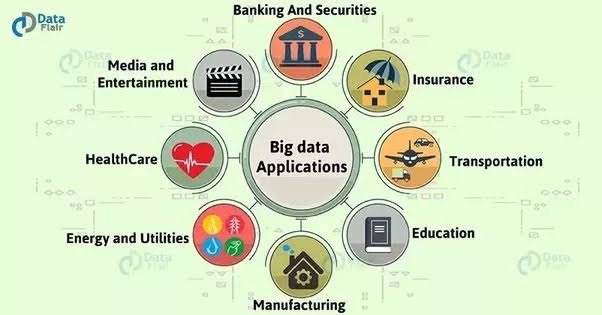
How Big Data Is Used in Different Industries
Big Data is not limited to technology companies. It has applications across many sectors.
Healthcare
Healthcare organizations generate large amounts of information from patient records, medical equipment, laboratory tests, and research. Analyzing this information can help researchers identify trends and support the development of better treatments.
Data can also help hospitals manage resources more efficiently. For example, information about patient admissions and appointment patterns can help organizations plan staffing and facilities.
Finance
Banks and financial institutions use data analysis to understand customer behavior, detect unusual transactions, assess risks, and improve financial services.
By analyzing transaction histories and other information, financial organizations can identify patterns that may indicate fraud. This allows them to investigate suspicious activity more effectively.
Retail
Retail businesses use customer and sales data to understand buying habits. They can determine which products are selling well, identify seasonal trends, and improve inventory planning.
Online retailers can also use customer behavior to provide personalized recommendations. When customers receive suggestions based on their interests, their shopping experience can become more relevant.
Transportation
Transportation companies can use data from vehicles, GPS systems, traffic networks, and mobile applications to improve routes and reduce delays.
For example, traffic data can help identify congested areas and support better route planning. Logistics companies can also analyze delivery information to improve efficiency and reduce unnecessary costs.
Education
Schools, colleges, and online learning platforms can use data to understand student performance and engagement. Information about attendance, test results, assignments, and course activity may help educators identify areas where students need additional support.
Big Data and Artificial Intelligence
Big Data and artificial intelligence are closely connected. AI systems often require large amounts of high-quality data to learn patterns and make predictions.
For example, a recommendation system may analyze millions of previous interactions to predict what a user might want to watch, read, or purchase. Similarly, machine learning models can use historical information to identify patterns and generate predictions.
However, more data does not automatically mean better results. If the data is inaccurate, biased, incomplete, or poorly organized, an AI system may produce unreliable outcomes. This is why data quality and responsible data management are so important.
Challenges of Managing Big Data
Despite its benefits, Big Data creates several challenges for organizations.
One major challenge is storage. As the amount of information grows, businesses need reliable systems capable of storing and accessing huge datasets.
Security is another important concern. Large databases may contain sensitive customer, financial, or business information. Organizations must protect this information against unauthorized access, cyberattacks, and accidental loss.
Privacy is also becoming increasingly important. People want to know how their personal information is collected and used. Businesses need clear policies and responsible practices when handling customer data.
Data quality can be another problem. If information contains errors or inconsistencies, the results of an analysis may be misleading. Organizations therefore need processes for cleaning, validating, and maintaining their datasets.
Finally, skilled professionals are needed to work with complex data. Data analysts, data scientists, engineers, and other specialists help organizations transform large amounts of information into useful insights.
The Future of Big Data
The importance of Big Data is likely to continue growing as technology develops. The expansion of connected devices, cloud computing, artificial intelligence, and the Internet of Things will generate even more information.
Businesses will increasingly look for ways to analyze data in real time. Instead of waiting days or weeks for reports, organizations may use automated systems to identify changes and respond quickly.
At the same time, responsible data use will become more important. Organizations will need to balance innovation with privacy, security, transparency, and ethical considerations.
The future of Big Data is therefore not simply about collecting more information. It is about collecting the right information, understanding it accurately, and using it responsibly.
Frequently Asked Questions About Big Data
1. What is Big Data in simple words?
Big Data is a very large and complex amount of information generated from sources such as websites, smartphones, social media, transactions, sensors, and connected devices. Special technologies are used to store, process, and analyze this information.
2. Why is Big Data important?
Big Data is important because it can help organizations discover useful patterns, understand customers, improve operations, reduce risks, and make more informed decisions based on real information.
3. What are the 5 Vs of Big Data?
The five commonly discussed characteristics are Volume, Velocity, Variety, Veracity, and Value. They describe the amount of data, the speed at which it is generated, its different formats, its reliability, and its usefulness.
4. Where is Big Data used?
Big Data is used in many industries, including healthcare, banking, retail, transportation, education, manufacturing, marketing, sports, and technology. Almost any organization that generates or collects significant amounts of information can benefit from data analysis.
5. How does Big Data help businesses?
It can help businesses understand customer behavior, improve products and services, optimize operations, identify market trends, detect fraud, and make better strategic decisions.
6. Is Big Data related to artificial intelligence?
Yes. Big Data and artificial intelligence are closely related because many AI and machine learning systems rely on large amounts of data to learn patterns and make predictions. However, good-quality data is essential for reliable AI results.
7. What are the biggest challenges of Big Data?
Common challenges include data storage, security, privacy, data quality, integration of different data formats, and the shortage of professionals with the skills needed to manage and analyze large datasets.
8. What is the future of Big Data?
The future of Big Data is expected to involve greater use of real-time analytics, artificial intelligence, cloud computing, and connected devices. At the same time, organizations will need to place greater emphasis on data privacy, security, quality, and responsible use.
Conclusion
Big Data has transformed the way organizations understand customers, solve problems, and make decisions. From healthcare and finance to retail, transportation, and education, large-scale data analysis is helping organizations discover patterns that were previously difficult to see.
However, data alone is not enough. Its real value comes from the ability to manage, analyze, and interpret it effectively. Organizations that invest in reliable technology, data quality, security, and skilled professionals can turn massive datasets into meaningful insights.
As digital technology continues to expand, Big Data will remain an important part of the modern world. The organizations that learn how to use it intelligently and responsibly will be better prepared to adapt to changing needs and opportunities.