
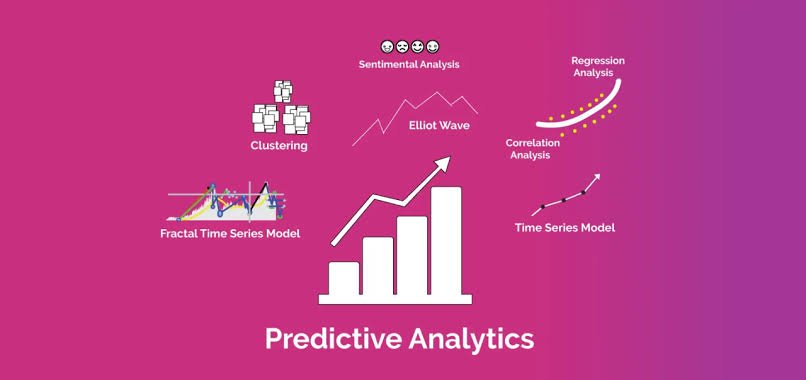
In today’s digital world, businesses collect an enormous amount of data every day. From customer purchases and website visits to social media interactions and financial transactions, this information can tell a powerful story. However, simply having large amounts of data is not enough. Businesses need to understand what that data means and, more importantly, what it can tell them about the future. This is where Predictive Analytics becomes valuable.
Predictive Analytics is a data analysis approach that uses historical information, statistical techniques, machine learning, and other analytical methods to identify patterns and make predictions about future events. Instead of only looking at what happened in the past, companies can use these insights to make smarter decisions about what may happen next.
What Is Predictive Analytics?
Predictive Analytics is the process of examining existing and historical data to estimate future outcomes. It does not guarantee exactly what will happen. Instead, it identifies patterns and probabilities that can help organizations make better-informed decisions.
For example, an online store may analyze a customer’s previous purchases, browsing behavior, and product searches. Based on this information, the company can predict which products the customer may be interested in buying next. Similarly, a bank can analyze transaction patterns to identify unusual activity that could indicate potential fraud.
The technology behind Predictive Analytics has become increasingly sophisticated. Modern systems can process huge datasets much faster than traditional methods, allowing businesses to identify trends and opportunities that might otherwise remain hidden.
How Does Predictive Analytics Work?
Predictive Analytics generally begins with data. The quality and quantity of available information have a significant impact on the usefulness of the final prediction.
The process usually involves several important steps.
First, businesses collect relevant data from different sources. This could include customer records, sales transactions, website activity, financial information, operational data, or information from connected devices.
Next, the data is cleaned and organized. Real-world datasets often contain missing values, duplicate records, or incorrect information. Cleaning the data helps improve the reliability of the analysis.
After that, analysts select appropriate statistical models or machine learning algorithms. These models examine historical patterns and relationships within the data.
The model is then tested to determine how accurately it can predict outcomes. Once it performs well enough, it can be used with new information to generate predictions.
Finally, businesses use these predictions to support decision-making. The results might help a company decide how much inventory to order, which customers are likely to leave, or where future demand may increase.
Why Is Predictive Analytics Important?
One of the biggest advantages of Predictive Analytics is that it allows organizations to become more proactive.
Traditional business decisions often depend heavily on historical reports. While these reports are useful, they mainly explain what has already happened. Predictive methods go a step further by helping businesses prepare for possible future situations.
For example, a retailer can use predictive models to estimate demand before a major shopping season. This can help the company avoid running out of popular products while also reducing the risk of ordering too much inventory.
Predictive Analytics can also improve customer experiences. By understanding customer behavior, businesses can provide more relevant recommendations, offers, and services.
Another major benefit is risk management. Organizations can identify warning signs earlier and take action before a potential problem becomes more serious.
Common Applications of Predictive Analytics
Predictive Analytics is used across many industries because almost every organization generates data that can be analyzed.
Retail
Retail companies use predictive models to understand customer behavior and forecast product demand. They can estimate which products are likely to become popular and determine when customers may be ready to make another purchase.
Personalized recommendations are another common example. When an online shopping platform suggests products based on your previous activity, predictive technology may be involved.
Healthcare
Healthcare organizations can use data analysis to identify potential health risks, predict patient outcomes, and improve resource planning.
For instance, predictive models may help hospitals estimate patient demand and manage staffing. They can also support medical professionals by identifying patterns in patient data that deserve further attention.
Banking and Finance
Financial institutions deal with significant amounts of risk, making prediction especially useful.
Banks can use predictive models for credit assessment, fraud detection, customer analysis, and financial forecasting. By examining historical transaction patterns, systems can flag activities that appear unusual or potentially fraudulent.
Marketing
Marketing teams often use Predictive Analytics to understand which customers are most likely to respond to a campaign.
Instead of sending the same message to everyone, companies can divide audiences into groups based on predicted behavior. This can improve campaign effectiveness and reduce wasted marketing spending.
Manufacturing
Manufacturers can use predictive technology to monitor equipment and identify signs of potential failure.
This approach, often called predictive maintenance, allows companies to repair machinery before a major breakdown occurs. Preventing unexpected downtime can save both time and money.
Transportation
Transportation and logistics companies can use predictive models to estimate delivery times, forecast demand, optimize routes, and manage resources.
By understanding historical traffic patterns and delivery data, organizations can make better decisions about scheduling and transportation planning.
Predictive Analytics vs. Traditional Data Analysis
Traditional data analysis often focuses on understanding past and current events. Businesses may use reports and dashboards to answer questions such as, “What happened last month?” or “How much did we sell?”
Predictive Analytics focuses on a different question: “What is likely to happen next?”
For example, a traditional report might show that sales increased by 15% during the previous holiday season. Predictive analysis can use that historical information, along with other variables, to estimate what sales might look like during the upcoming holiday season.
Both approaches are useful. Predictive methods do not replace traditional reporting; instead, they add another layer of insight that can help organizations prepare for the future.
Benefits of Predictive Analytics
There are several reasons businesses are investing more heavily in predictive technologies.
Better decision-making: Data-driven predictions can provide additional information when managers are deciding between different strategies.
Improved customer experiences: Companies can better understand customer preferences and deliver more personalized services.
Reduced risk: Predictive models can identify potential problems before they become expensive or difficult to manage.
Greater efficiency: Organizations can forecast demand, manage resources, and automate certain decisions more effectively.
Cost savings: Predicting equipment failures, customer behavior, or inventory requirements can help reduce unnecessary expenses.
Competitive advantage: Businesses that understand future trends earlier may be better prepared to respond to changing markets.
Challenges of Predictive Analytics
Despite its benefits, Predictive Analytics is not perfect. One of the biggest challenges is data quality. If the information used to train a model is incomplete, outdated, or inaccurate, the resulting predictions may also be unreliable.
Privacy is another important concern. Businesses often work with sensitive customer or employee information, so they need appropriate security measures and responsible data practices.
There is also the risk of bias. If historical data contains unfair or inaccurate patterns, a predictive model may reproduce those problems. Organizations should therefore monitor their models and evaluate their results carefully.
Finally, predictions should not be treated as absolute facts. A model estimates probabilities based on available information, but unexpected events can always change the outcome.
The Future of Predictive Analytics
As businesses continue to generate more digital information, the role of Predictive Analytics is likely to grow. Advances in artificial intelligence and machine learning are making it possible to analyze increasingly complex datasets and identify patterns more quickly.
Companies are also moving toward real-time analytics. Instead of waiting for monthly or weekly reports, organizations can receive predictions based on information that is being generated right now.
This can be especially useful in industries where conditions change quickly. A retailer, for example, may adjust inventory decisions as customer demand changes, while a logistics company may respond to changing transportation conditions.
However, the future of predictive technology will not depend only on advanced algorithms. Human judgment will remain important. Businesses need people who can understand the context behind the data, question unusual results, and decide how predictions should be used.
Frequently Asked Questions
1. What is Predictive Analytics in simple words?
Predictive Analytics is a method of using past and current data to estimate what is likely to happen in the future. Businesses use it to identify patterns, forecast trends, manage risks, and make more informed decisions.
2. What are some examples of Predictive Analytics?
Common examples include predicting customer purchases, forecasting sales, detecting financial fraud, estimating equipment failures, predicting patient risks, and forecasting product demand.
3. What technologies are used in Predictive Analytics?
Predictive Analytics can involve statistics, machine learning, artificial intelligence, data mining, and various data-processing technologies. The exact tools depend on the type of data and the business problem being addressed.
4. Is Predictive Analytics accurate?
Predictive Analytics can be highly useful, but it is not always 100% accurate. The quality of the data, the model being used, and unexpected changes in circumstances can all affect predictions. Results should therefore be treated as informed estimates rather than guarantees.
5. Why do businesses use Predictive Analytics?
Businesses use Predictive Analytics to make better decisions, reduce risks, improve customer experiences, forecast demand, control costs, and identify potential opportunities. It helps organizations move from simply reacting to events toward preparing for possible future outcomes.
Conclusion
Predictive Analytics has changed the way organizations think about data. Rather than simply examining historical information, businesses can use data to estimate what may happen in the future and prepare accordingly.
From retail and healthcare to finance, marketing, manufacturing, and transportation, predictive methods can help organizations improve efficiency, manage risk, understand customers, and make better strategic decisions.
At the same time, successful Predictive Analytics requires high-quality data, responsible practices, appropriate technology, and human oversight. Predictions are not guarantees, but when they are developed and used carefully, they can provide valuable guidance.
As data continues to become an essential part of modern business, Predictive Analytics will remain an important tool for organizations that want to make informed decisions and stay prepared for what comes next.