
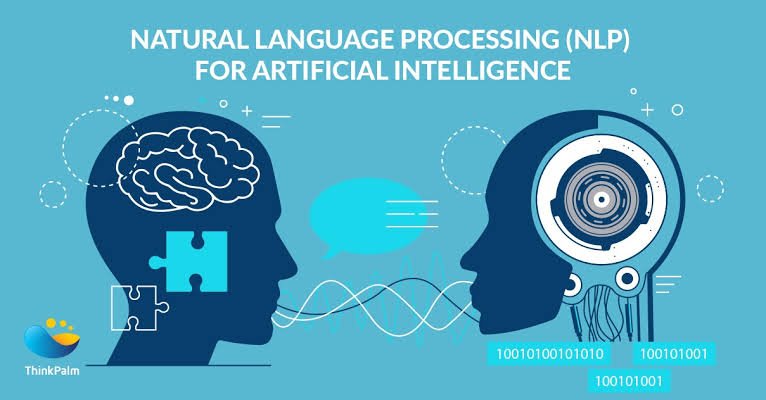
Language is one of the most powerful tools humans have for sharing ideas, emotions, knowledge, and experiences. We use words every day to ask questions, explain problems, tell stories, and connect with other people. As technology continues to become a bigger part of our lives, computers are also learning to understand the way humans communicate. This is where natural language becomes especially important.
Natural language refers to the languages people naturally use to communicate, such as English, Spanish, Arabic, French, and many others. Unlike programming languages, which are designed specifically for computers, natural languages develop naturally within human societies. Today, technology can analyze and process these languages to understand what people are saying and respond in useful ways.
From search engines and voice assistants to chatbots and translation applications, natural language technology is changing how people interact with digital systems. But what exactly does it mean, how does it work, and why is it so important? Let’s take a closer look.
What Is Natural Language?
Natural language is the ordinary language that humans use in everyday communication. When you talk to a friend, send a text message, write an email, or ask a question, you are using natural language.
For example, a person might say, “Can you recommend a good restaurant near me?” A human listener can usually understand the meaning immediately. A computer, however, needs specialized technology to interpret the words, identify the user’s intention, and provide an appropriate answer.
Natural language can be complicated because people do not always communicate in perfectly structured sentences. We use slang, abbreviations, humor, emotions, different accents, and words that can have multiple meanings. Context also plays a major role in understanding what someone means.
This complexity makes natural language both fascinating and challenging for computers.
How Does Natural Language Work With Technology?
Computers process information differently from humans. A computer does not naturally understand words in the same way a person does. It needs algorithms and language-processing techniques to analyze text or speech.
Natural language processing, commonly known as NLP, is a branch of artificial intelligence that helps computers work with human language. NLP can be used to analyze written text, understand spoken language, identify important information, translate languages, and generate responses.
When a person enters a sentence into a digital system, several things may happen behind the scenes. The system can break the sentence into individual words, examine their relationships, identify the overall meaning, and determine what the person is trying to accomplish.
Modern AI systems have become much better at this process because they can learn from enormous amounts of language data. Instead of simply matching exact words, advanced systems can consider context and relationships between words.
Why Is Natural Language Important?
The importance of natural language has grown rapidly because people want technology to be easier to use.
In the past, using a computer often required users to understand specific commands or technical interfaces. Today, people increasingly expect to communicate with technology in a way that feels similar to talking with another person.
For example, instead of learning a complicated command, someone can simply ask, “What will the weather be like tomorrow?” A language-based system can interpret the question and provide relevant information.
This makes technology more accessible to people who may not have technical knowledge. It also allows businesses to create more convenient customer experiences.
Natural language technology can help companies answer customer questions, analyze feedback, summarize documents, translate content, and automate repetitive communication tasks.
Natural Language in Search Engines
Search engines are one of the most familiar examples of technology using human language.
People rarely search for information using perfectly structured phrases. Instead, they often type questions or conversational phrases such as “How can I improve my sleep?” or “What are the best places to visit in summer?”
Modern search systems are designed to understand the meaning behind these queries rather than focusing only on individual keywords.
This is important because two different searches can express essentially the same idea. A person might search for “ways to lose weight naturally,” while another might type “how can I get healthier without extreme diets?” The wording is different, but the underlying intent may be similar.
Understanding this intent allows search engines to provide more relevant results.
Natural Language and Artificial Intelligence
Artificial intelligence has taken natural language capabilities to another level. Modern AI models can read, analyze, summarize, translate, and generate human-like text.
These systems are trained using large collections of text and learn patterns in how language is used. They can recognize relationships between words and understand many aspects of context.
For example, if someone says, “I went to the bank because I needed some money,” the word “bank” most likely refers to a financial institution. But if someone says, “We sat on the bank of the river,” the meaning is completely different.
Understanding these differences requires context. Advanced AI systems are increasingly capable of handling such situations.
Everyday Applications of Natural Language
Natural language technology is already present in many everyday products and services.
Voice assistants allow users to speak naturally when setting reminders, asking questions, or controlling devices. Translation tools help people communicate across language barriers. Customer-service chatbots can answer common questions without requiring a human representative for every interaction.
Email applications can also use language analysis to identify spam, suggest responses, organize messages, or detect important information.
In education, language-based AI tools can help students understand difficult concepts, improve writing, translate material, and practice communication skills.
Healthcare organizations can use language-processing systems to organize information from documents and assist with administrative tasks. Businesses can analyze customer reviews to identify common complaints, preferences, and trends.
These examples show that natural language is not limited to one industry. It can be useful anywhere people need to communicate with or through technology.
Challenges of Understanding Human Language
Although technology has made impressive progress, understanding natural language remains difficult.
One major challenge is ambiguity. A single word can have several meanings depending on the situation. Humor, sarcasm, cultural references, and indirect communication can also be difficult for computers to interpret correctly.
For instance, when someone says, “Great job!” they may genuinely be praising another person, or they may be using sarcasm after something went wrong. The words themselves are identical, but the intended meaning can be completely different.
Different dialects, accents, spelling styles, and informal expressions create additional challenges.
Privacy is another important consideration. Language-based systems may process large amounts of personal or sensitive information. Companies therefore need to think carefully about how language data is collected, stored, and used.
The Future of Natural Language
The future of natural language technology is likely to become even more conversational and personalized.
As AI systems improve, people may interact with computers primarily through ordinary language rather than traditional menus and commands. Instead of searching through multiple settings, a person might simply explain what they want and allow an AI system to handle the process.
Businesses may also use language technology to create more personalized customer experiences. Educational platforms could adapt explanations to individual students, while workplace tools could make it easier to search and understand large collections of documents.
Another important development will be multilingual communication. Better language models could make it easier for people who speak different languages to communicate with each other in real time.
However, progress should be accompanied by responsible development. Accuracy, privacy, fairness, transparency, and human oversight will remain important as language technology becomes more powerful.
Natural Language vs. Programming Language
It is useful to understand the difference between natural language and programming language.
Natural language is created and used by humans for communication. It can be flexible, emotional, informal, and sometimes ambiguous. Programming languages, on the other hand, are designed to provide precise instructions to computers.
For example, Python and JavaScript follow specific rules that computers can interpret. English does not have the same level of strict structure.
This difference explains why teaching computers to understand human language is such a challenging task. Humans can easily understand incomplete sentences or infer meaning from context, while computers need sophisticated systems to make similar interpretations.
Why Businesses Are Investing in Language Technology
Companies are increasingly interested in natural language because communication is central to almost every business.
Customer support is one obvious example. Instead of making customers wait for a representative, businesses can use AI-powered systems to handle simple questions immediately.
Language analysis can also help companies understand what customers are saying about their products. By analyzing reviews, surveys, emails, and social media conversations, organizations can discover common opinions and emerging trends.
Employees can benefit as well. Language-based tools can summarize meetings, organize information, draft routine documents, and make large amounts of written material easier to search.
The goal is not necessarily to replace human communication but to make routine communication faster and more efficient.
FAQs About Natural Language
1. What does natural language mean?
Natural language refers to the languages humans naturally use to communicate with one another, such as English, Spanish, Arabic, French, and Chinese. It includes spoken and written communication and can contain context, emotion, slang, and informal expressions.
2. What is natural language processing?
Natural language processing, or NLP, is a field of artificial intelligence that enables computers to analyze, understand, interpret, and generate human language. It is used in applications such as chatbots, translation tools, search engines, and voice assistants.
3. Why is natural language difficult for computers to understand?
Human language can be ambiguous and highly dependent on context. People also use sarcasm, slang, humor, incomplete sentences, and cultural references. Computers need advanced language-processing techniques to interpret these different forms of communication accurately.
4. Where is natural language technology used?
Natural language technology is used in search engines, virtual assistants, chatbots, translation applications, email tools, educational platforms, customer-service systems, and many AI-powered applications. Its use continues to expand across different industries.
5. What is the future of natural language technology?
The technology is expected to become more conversational, accurate, multilingual, and personalized. People may increasingly communicate with software through ordinary language instead of complicated commands, while businesses and organizations may use language-based AI to improve communication and productivity.
Conclusion
Natural language is the foundation of human communication, and technology is becoming increasingly capable of working with it. Through artificial intelligence and natural language processing, computers can analyze text, understand questions, translate languages, generate content, and respond to users in increasingly useful ways.
Although challenges such as ambiguity, sarcasm, cultural differences, privacy, and accuracy remain, the progress in this field has already changed how people interact with technology.
As these systems continue to develop, communicating with computers may become as simple as having a conversation with another person. The real value of natural language technology lies in its ability to reduce the distance between humans and machines, making digital tools more accessible, useful, and intuitive.